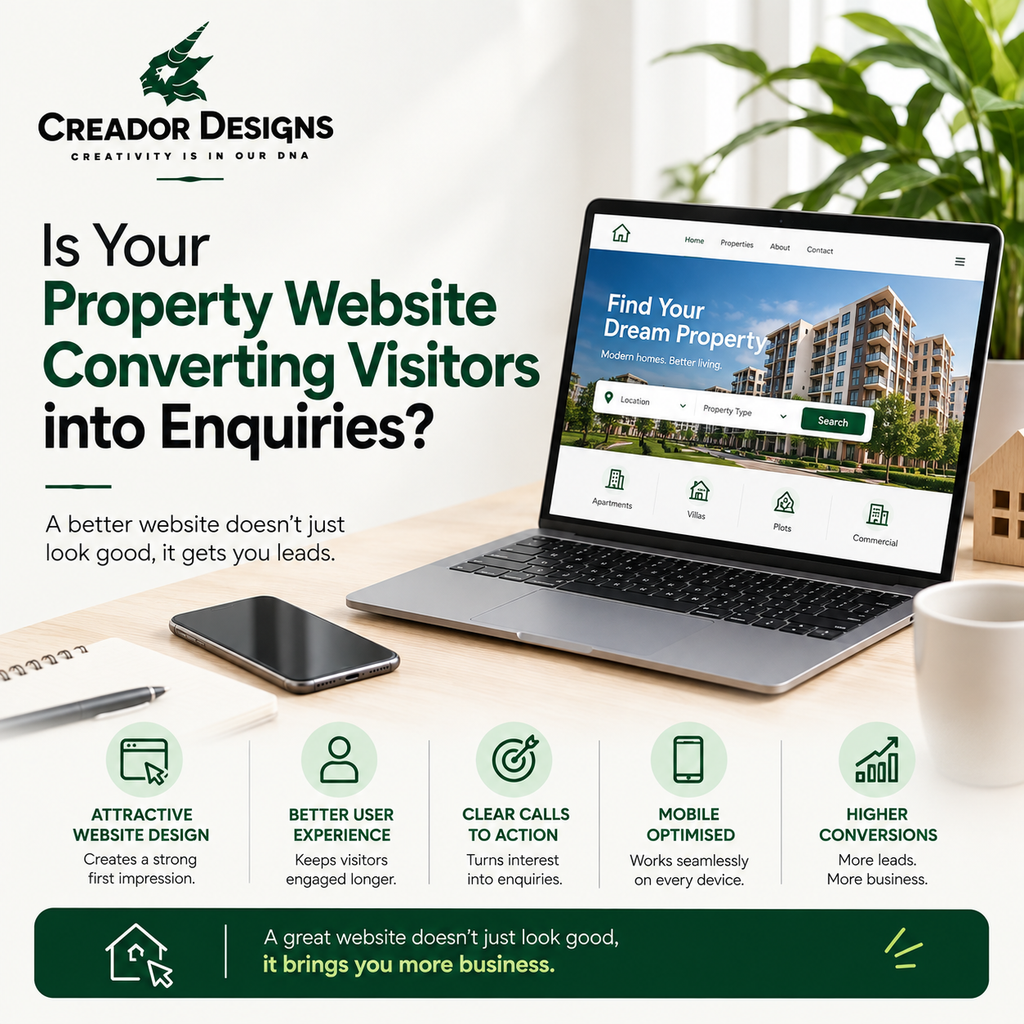
A property website converts visitors into enquiries when it provides clear property information, strong calls-to-action, fast loading, mobile-friendly design, trust signals, and simple enquiry forms. If visitors are reaching your website but not contacting you, the issue may be with your website experience, content, targeting, or conversion process.
Key Takeaways
- Make property details easy to understand.
- Use clear “Enquire Now,” “Book a Site Visit,” and “Get Pricing” CTAs.
- Optimize the website for mobile users.
- Keep enquiry forms short and simple.
- Add location, amenities, pricing information, and project highlights.
- Build trust with testimonials, project information, and company details.
- Track website visitors and enquiry conversions.
- Optimize landing pages used for Google and Meta Ads.
Why Website Visitors Are Not Becoming Enquiries
Getting traffic to your property website is only the first step. The real goal is to turn relevant visitors into potential buyers.
If people visit your website but leave without submitting a form, calling, or contacting you on WhatsApp, your website may not be giving them enough reasons to take the next step.
Common problems include:
- Unclear project information
- Weak call-to-action buttons
- Complicated enquiry forms
- Slow website speed
- Poor mobile experience
- Lack of pricing or project details
- Weak trust signals
- Poorly designed landing pages
- No clear next step for visitors
1. Make Your Property Information Clear
Potential buyers should quickly understand what the project offers.
Your website should clearly present:
- Project location
- Property types
- Configuration
- Key amenities
- Project highlights
- Nearby landmarks
- Price or pricing guidance where appropriate
- Construction/project status
- Developer information
- Contact options
The easier it is to understand the project, the easier it becomes for visitors to make an enquiry.
2. Use Strong Calls-to-Action
A visitor should never have to search for how to contact you.
Use clear CTAs such as:
Enquire Now
Book a Site Visit
Get Project Details
Check Availability
Get Pricing
Talk to an Expert
Place CTAs throughout the website, especially after important project information.
3. Optimize Your Website for Mobile
Many property searches happen on smartphones. If your website is difficult to navigate on mobile, potential buyers may leave before enquiring.
A mobile-friendly property website should have:
- Easy-to-read text
- Fast loading pages
- Simple navigation
- Click-to-call functionality
- WhatsApp/contact buttons
- Easy-to-complete forms
- Properly optimized images
Mobile usability is not just a design feature—it can directly affect enquiries.
4. Keep Enquiry Forms Simple
Long forms can discourage potential buyers from submitting their details.
Instead of asking for unnecessary information, start with essential fields such as:
| Field | Purpose |
|---|---|
| Name | Identify the enquiry |
| Phone Number | Enable follow-up |
| Optional communication | |
| Property Interest | Understand buyer intent |
| Preferred Contact Time | Improve follow-up |
You can collect additional information later during the sales conversation.
5. Create Dedicated Landing Pages for Campaigns
If you are running Google Ads or Meta Ads, sending every visitor to your homepage may not be the best strategy.
Create dedicated landing pages for individual projects or campaigns.
For example:
Ad → Property Landing Page → Project Details → Enquiry Form → Sales Follow-Up
The landing page should match the message shown in the advertisement.
This creates a smoother journey from ad click to property enquiry.
6. Build Trust Before Asking for an Enquiry
Property purchases involve significant financial decisions. Visitors need confidence before they share their contact details.
Add relevant trust-building information such as:
- Developer/company information
- Completed projects
- Project details
- Location information
- Customer testimonials where genuine
- Project images
- Approvals or relevant information where applicable
- Clear contact details
A professional website can make your business appear more credible and established.
7. Show the Location Clearly
Location is one of the most important factors in property buying.
Make it easy for visitors to understand:
- Exact project area
- Nearby schools
- Hospitals
- Shopping areas
- Transport options
- Major roads
- Business hubs
- Google Maps location
A strong location section can help visitors decide whether the property matches their requirements.
8. Improve Website Speed
A slow website can cause potential buyers to leave before they even see the project details.
Optimize:
- Large property images
- Videos
- Website code
- Plugins and scripts
- Hosting performance
- Mobile page experience
The goal is simple: help visitors reach important information quickly.
9. Make the Next Step Obvious
Your website should guide visitors toward one clear action.
For example:
Explore Project → View Floor Plans → Check Pricing → Book Site Visit
Avoid overwhelming visitors with too many competing options.
A well-planned user journey can make the website more effective at generating enquiries.
10. Track Where Your Enquiries Come From
Website analytics can help identify which marketing channels are actually producing results.
Track:
- Website visitors
- Landing-page visits
- Form submissions
- Phone calls
- WhatsApp enquiries
- Traffic sources
- Campaign performance
- Conversion rate
This helps real estate businesses understand which campaigns are generating traffic and which are generating genuine property enquiries.
What Makes a Property Website High-Converting?
| Website Element | Conversion Benefit |
|---|---|
| Clear Project Information | Helps visitors understand the property |
| Strong CTA | Encourages action |
| Mobile-Friendly Design | Improves mobile experience |
| Simple Form | Reduces enquiry friction |
| Fast Loading | Keeps visitors engaged |
| Location Information | Helps buyers evaluate the project |
| Trust Signals | Builds confidence |
| Dedicated Landing Pages | Improves campaign relevance |
| Analytics | Helps measure performance |
Common Property Website Mistakes
Avoid these mistakes if your goal is to generate more enquiries:
- Using only attractive property images without useful information
- Hiding contact details
- Using generic CTA buttons
- Making forms unnecessarily long
- Ignoring mobile users
- Sending paid traffic to irrelevant pages
- Having slow-loading pages
- Not tracking conversions
- Providing outdated project information
- Making visitors work too hard to find important details
How Creador Designs Can Help
At Creador Designs, we focus on creating digital experiences that support business growth—not just attractive websites.
For real estate businesses, a strong digital strategy can combine:
- Property website design
- Landing page design
- SEO
- Google Business Profile optimization
- Google Ads
- Meta Ads
- Lead generation
- Social media marketing
- Creative design
The objective is to create a clear journey from online search → website visit → property enquiry → sales opportunity.
FAQs
How do I increase enquiries from my property website?
Improve your website’s mobile experience, simplify enquiry forms, use strong CTAs, provide useful property information, build trust, and create dedicated landing pages for marketing campaigns.
Why are people visiting my property website but not enquiring?
Possible reasons include poor website design, unclear information, weak CTAs, slow loading speed, complicated forms, or a mismatch between your advertising and landing page.
Should real estate businesses have separate landing pages?
Yes. Dedicated landing pages can be useful for individual properties, projects, locations, or advertising campaigns because they allow visitors to find relevant information quickly.
What CTA should a property website use?
Useful CTAs include Enquire Now, Book a Site Visit, Get Pricing, Check Availability, and Get Project Details.
Can SEO help generate property enquiries?
Yes. SEO can help your property website appear for relevant searches and attract people actively looking for properties, projects, locations, or real estate services.
Final Thought
If your property website is getting visitors but generating very few enquiries, the problem may not be your traffic—it may be your conversion experience.
Clear property information, strong CTAs, mobile optimization, simple forms, trust signals, fast loading pages, and dedicated landing pages can help turn more relevant visitors into potential buyers.
Your property website should not just showcase properties. It should create a clear path for visitors to take the next step.